New Frontiers in Crop Nutrition Technology: Sulfur
The Clean Air Act of the 1970s has made a huge difference in the quality of our air, water and environment. But there is one downside for farmers. The free sulfur from acid rain and atmospheric deposition is no longer supplementing agricultural soil and crop sulfur demands.
Why does the loss of this free sulfur have a negative impact on crop production? Reports from the field are detailing more sulfur deficiencies (see symptoms of deficiency for canola, corn and wheat).
Unbalanced budgets
Most of the sulfur needed for a given crop year comes from microbial activity in the soil and an important reservoir of sulfur – organic matter. When microbes are active and decompose the soil organic matter, sulfur is freed up for plant use as a result. Losses of soil organic matter, due to erosion and tillage, represent a decrease in the total soil sulfur bank. Higher yielding crops are also removing more sulfur from the soil, which can deplete the overall sulfur ‘bank account’ belowground.
For example, in 1990 the average corn yield was 118.5 bu/ac and in 2023 it was 173.3 bu/ac. This 54.8 bu/ac increase changes the removal rate of sulfur from 9.5 lbs/ac to 13.9 lbs/ac (a 32% change).¹ Increased removal rates paired with a decrease in atmospheric sulfur means that farmers need to pay attention to their sulfur levels more than ever before due to an unbalanced sulfur budget (inputs < outputs).
Get more per granule
How can farmers supplement sulfur in an economical and agronomically effective way? Smart Nutrition MAP+MST (9-43-0-16S), a homogeneous micronized sulfur technology, can be a key fertilizer partner for farmers.
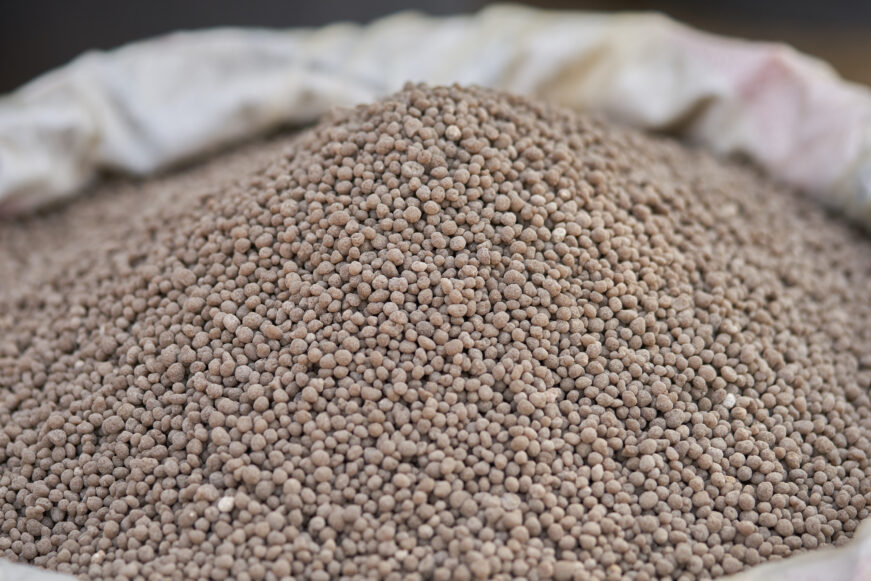
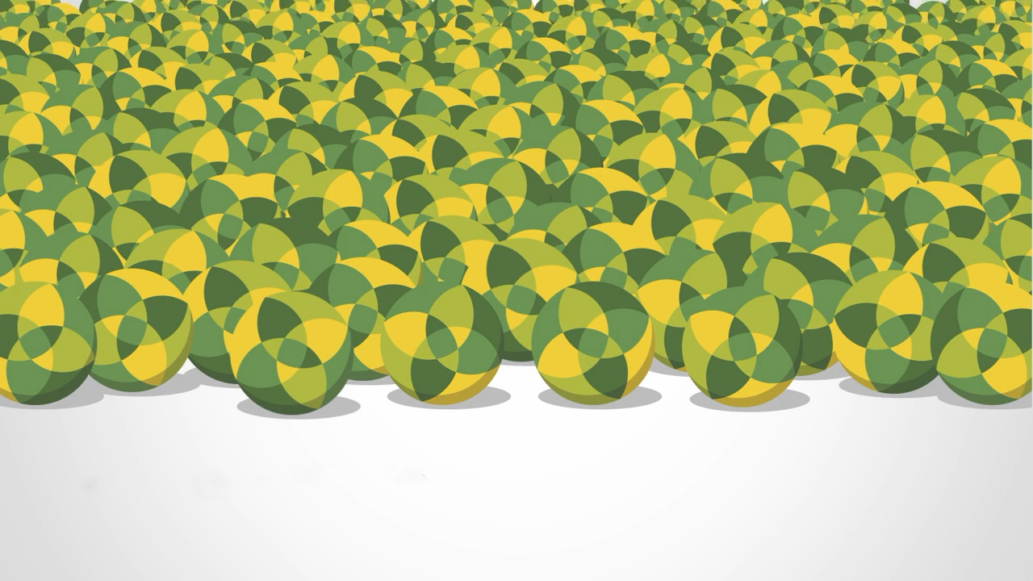
Smart Nutrition MAP+MST is a granular phosphate and sulfur product that consistently delivers a nutrient balance of 9-43-0-16 in every granule, which adds up to a nutrient density of 68 percent. Compared to a straight MAP product, which has a nutrient density of 63 percent (11-52-0-0), and other competitive products that offer even less available nutrients than MAP, farmers are getting greater nutrient efficiency in every granule of Smart Nutrition MAP+MST.

The micronized sulfur technology (MST) gives farmers a better way to feed the much-needed sulfur to their crops. The smaller particle size of the sulfur in each granule allows for faster oxidation, meaning the elemental sulfur will be available for growing crops during the growing season.
Are you ready to make the switch to Smart Nutrition MAP+MST? Connect with your local rep to get started.
Sources:
Thaler EA, Larsen IJ, Yu Q. The extent of soil loss across the US Corn Belt. Proc Natl Acad Sci U S A. 2021 Feb 23;118(8):e1922375118. doi: 10.1073/pnas.1922375118. PMID: 33593895; PMCID: PMC7923383.