Smart Sulfur Management: Tips for Timing, Tools and Sources
Sulfur plays a critical role in soil, and our understanding of how to manage it has changed over time. Over the last several decades, research has helped us better understand how this critical nutrient interacts in the soil and what sources, timing and tools can help us better manage it.
Four episodes of The Dirt PodKast, presented by eKonomics, spotlight this recent research and uncover how sulfur interacts with other nutrients – including nitrogen – the evolving need for sulfur fertilization and strategies for smarter sulfur management. We’ve summarized the most important insights shared in these episodes by Agronomist, Ray Dowbenko, Nutrien Senior Agronomist, Alan Blaylock, the Sulphur Institute’s Senior Agronomist, Ron Olson and University of Colorado Boulder Faculty Lead and Professor, Eve-Lyn Hinckley.
The History of Sulfur Use
“Sulfur wasn’t much of an issue 30 years ago, but it certainly is today.” – Ray Dowbenko, Agronomist
Our use of sulfur in agriculture has evolved over time. It has historically gone beyond its role as a plant nutrient and has been used as a pesticide, fungicide, soil conditioner or pH adjuster.
In plants, it’s used to support the production of critical amino acids and essential proteins as well as the production of chlorophyll, giving plants their green vibrant color.
But when did our need to actually apply sulfur begin?
Why Sulfur Management Matters Today
Historically, we used to ‘rain out’ the sulfur needed in our crops, getting natural deposits from acid rain. But that all changed when the Clean Air Act was first introduced in the United States in 1963, an air pollution control program that changed the way we looked at sulfur forever.
The act established clean air standards that limited the amount of sulfur emitted from power plants, factories and other production facilities, leading to a decline in the amount of ‘free sulfur’ deposited in the ground.
“We’re now seeing fairly widespread sulfur deficiencies in places where we haven’t seen them historically.” – Alan Blaylock, Senior Agronomist, Nutrien
Now, rather than relying on the atmosphere to provide all the sulfur our crops need, growers often need to apply it through fertilizers, manure and other plant nutrition products.
But every soil is different, and that’s why the focus on studying sulfur management is more important than ever. The more we understand, the better we can manage and apply it to individual fields to enhance their productivity.
The Relationship Between Sulfur and Other Vital Nutrients
“Sulfur can actually increase the nitrogen use efficiency of crops like corn.” – Eve-Lyn Hinckley, Ph.D.
According to Dr. Hinckley, the most exciting area of sulfur research thus far is the interaction it has with other nutrients. Understanding how sulfur interacts and affects the availability of other nutrients in the soil is essential to our greater understanding of general soil fertility, its health and the ability to meet our production goals.
Dr. Hinckley has recently been studying the specific relationship between sulfur and nitrogen. She found sulfur applications can increase nitrogen use efficiency in various crops, including corn. As nitrogen can be highly susceptible to loss, this relationship is critical to enhancing the productivity of applied fertilizers and preventing costly input losses.
“If you account for the full economics of it, it actually saves farmers money to add sulfur.” – Dr. Eve-Lyn Hinckley
Nutrien Senior Agronomist, Dr. Alan Blaylock, has also been investigating the relationship between nitrogen and sulfur. He found that these two macronutrients work together to form amino acids and proteins in plants, which makes them somewhat inseparable. Sulfur can also help stimulate the uptake of nitrate and the more efficient use of nitrate in the plant, preventing loss and increasing nutrient efficiency. Adequate supplies of both nitrogen and sulfur will help maximize results in the field, prevent deficiencies and make the most of our fertilizer investments.
The relationship between nitrogen and sulfur is still undergoing further research, but these early findings indicate that these nutrients can work together to increase input efficiency to protect grower profitability and the environment.
The Right Time to Apply Sulfur
“As the crop is growing, it needs a continuous supply of sulfur.” – Ray Dowbenko, Agronomist
Most crops have a season-long requirement for sulfur. They start taking it up early in the growing season and continue to rely on it all the way to maturity. This means you need to provide a continuous supply of sulfur to your crops.
Agronomist Ray Dowbenko says that since sulfur isn’t mobile within the plant, it can’t move from older leaves to new growth. He recommends applying sulfur early in the growing season to avoid deficiencies and ensure plants can access the sulfur they need during the growing season.
The Right Sources of Sulfur
“There are really two buckets. We’ve got the elemental sulfur and then we’ve got the sulfate-sulfur.” – Mike Howell, Senior Agronomist, Nutrien
When it comes to finding the right source of sulfur, growers can choose from one of the two most common sources: sulfate-sulfur or elemental sulfur. Each has their own unique benefits in the field.
Sulfate-Sulfur
Sulfate-sulfur sources, such as ammonium sulfate or potassium sulfate, contain the plant-available form of sulfur (SO₄²⁻). These products are immediately available when applied to the soil and do not require any microbial processing. But the sulfate form of sulfur is mobile in the soil, creating a risk of loss through leaching in areas with heavy rainfall or wet soil conditions. That’s what makes this sulfur source ideal for growers with drier soils where the potential for loss is low. It’s well suited for both pre-plant and in-season applications.
Elemental Sulfur
Elemental sulfur (S°) is normally applied as a maintenance application because it will take time to become available to the crops. Elemental sulfur is the most concentrated form of sulfur and is immobile in the soil until oxidation occurs with the help of soil microbes. These products provide a slow, continuous release of sulfur during the oxidation process. The slow release helps prevent sulfur loss from leaching, thus increasing plant uptake.
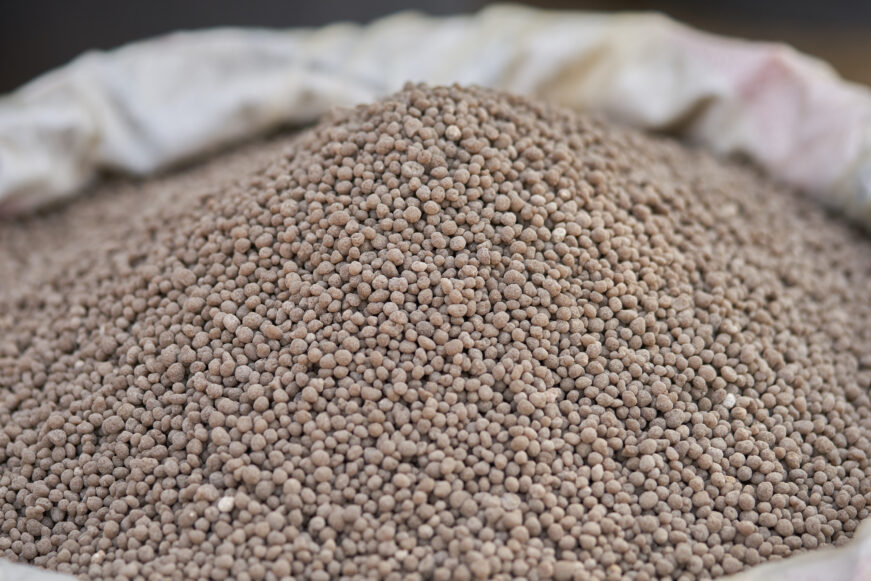
In the past, traditional elemental sulfur sources were oxidized too slowly to meet the demands of growing crops. New innovations, like Smart Nutrition MAP+MST, address these challenges with traditional elemental sulfur products. It delivers the smallest particle size in the industry that can oxidize quicker, allowing growers to take advantage of the benefits of elemental sulfur without worrying about sufficient supplies. As soil warms up, microbes work to slowly release the sulfur your crops need.
“It’s considered a slow-release sulfur source, so it releases that sulfur to the crop over time, and that helps to prevent loss of that sulfur by leaching.” – Alan Blaylock, Senior Agronomist, Nutrien
Deliver the Phosphorus and Sulfur Your Crops Need
As our understanding of sulfur continues to evolve, one thing is clear; managing it strategically is essential to optimizing yields and improving grower profitability and productivity. Innovations like Smart Nutrition MAP+MST can help you accomplish just that, while maximizing the efficiency of the macronutrients you apply and supplying the sulfur your crops need all season long.
Listen to the full episodes of The Dirt PodKast below to learn more about the right timing, sources and tools for smarter sulfur management:
The Dirt PodKast, Season 1, Episode 12: Role of Sulfur in Plants with Alan Blaylock & Ron Olson
The Dirt PodKast, Season 3, Episode 36: Sulfur and Nitrogen, The Dynamic Duo
The Dirt PodKast, Season 4, Episode 20: Smarter Sulfur Management
The Dirt PodKast, Season 4, Episode 24: Managing Sulfur: Timing, Sources and Tools
Want to learn more about the importance of sulfur and tips for greater sulfur management? Explore the resources below: