Reducing Loss and Improving Uptake with Sustainable Phosphorus Management
The philosophy at Iowa State University is that phosphorus and potassium are the true basis of crop production. While nitrogen is essential, these two macronutrients are considered to be the foundation of every grower’s nutrient management plan. Phosphorus is said to be the energy currency of all life. Without it, you’ll witness diminished plant growth, slower maturity, reduced yield and an overall lower quality crop.
Phosphorus – A Critical Part of Your Fertilizer Program
Plants rely on phosphorus from the very beginning of production. It plays an essential role in the first stages of germination – supporting energy reactions, cell division and plant growth. Plants then rely on the macronutrient throughout each stage of growth to support plant development, reproduction and photosynthesis.
Phosphorus is highly concentrated in your seeds with about 80 percent being removed through harvest every year. That’s why it’s essential to replace it in your fertilizer program.
As a relatively immobile nutrient, phosphorus doesn’t easily move through the soil for plant uptake. A variety of agronomic practices can help you improve plant access to phosphorus and maintain an adequate supply for your crops.
The three articles below summarize these practices based on recent insights shared by Agronomist Blake Weiseth along with expert findings from recent university research.
1. The Phosphorus Management Dichotomy and the 4Rs
Applying additional phosphorus through your fertilizer program helps you to protect your yield potential and support overall harvest goals. But not all of the phosphorus you apply will be used by your crops, and some of it will be lost in runoff water that will filter into surface water bodies. On average, only 5 to 30 percent of the phosphorus you apply will make it into the plant. Your specific geography, soil type and local conditions should all be considered when outlining your phosphorus management plan to prevent loss and increase uptake. Consider all possible pathways of loss, including snowmelt runoff and water-accumulating depressions.
Weiseth recommends using the 4Rs of nutrient stewardship to manage this dichotomy and drive greater phosphorus management outcomes. The framework focuses on matching both the rate and timing of fertilizer applications with the crop’s predicted demand for nutrients and the soil you are growing in to help you meet your agronomic and environmental goals. As phosphorus availability has been shown to be highly correlated with topography, soil management zones may help improve any site-specific 4R Nutrient Stewardship plans. Farm practices, including available equipment and available fertilizer products, should also be considered when creating a 4R plan.
Learn more about managing this dichotomy with the 4Rs in Weiseth’s full article.
2. Reducing Loss With the 4Rs
Weiseth found that the 4R framework can help you limit potential losses by applying the right source of phosphorus at the right time, in the right place and at the right rate. A recent three-year field study found that variable rate fertilizer applications can reduce soluble inorganic phosphorus losses in snowmelt runoff water without sacrificing yields. It can also reduce overall fertilizer application rates to help drive greater profitability. Rooting your fertilizer program in the 4Rs allows you to balance and achieve agronomic and environmental outcomes on the farm.
Learn more about reducing losses with the 4Rs in Weiseth’s full article.
3. Finding the Right Source
According to Weiseth, the agronomic and environmental performance of your fertilizer source is a key consideration throughout planning. As the plant availability and mobility of phosphorus fertilizer is influenced by its solubility, it’s essential to analyze your fertilizer source before you finalize your fertilizer program.
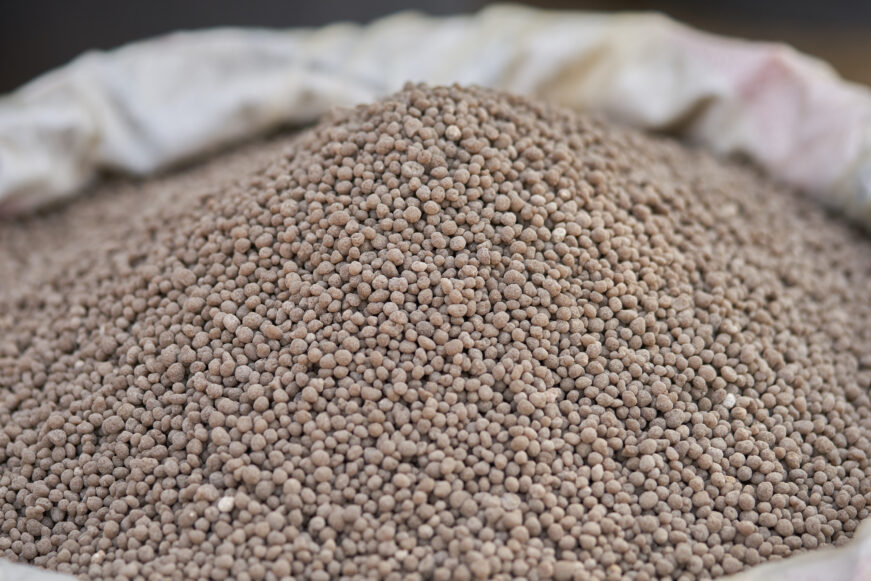
A recent study from the Northern Great Plains analyzed the performance of eight phosphorus fertilizer sources across a range of soil conditions. The study found that Smart Nutrition MAP+MST resulted in greater yields and greater total phosphorus uptake compared to the other seven sources. Tested under drought conditions, the solubility of Smart Nutrition MAP+MST was able to improve a crop’s ability to access phosphorus in the soil.
Strongly consider your fertilizer source and its solubility before investing. Learn more about the importance of fertilizer solubility in Weiseth’s full article.
Avoiding Deficiency With A Maintenance Approach
When soil becomes deficient in phosphorus, it can be expensive for you to return your fertility to an optimal level. Maintenance rates can help you provide an adequate supply of phosphorus in the soil. While maintenance rates are not directly rooted in improving your profitability, they can help you balance higher yields while maintaining soil fertility and environmental health. The University of Kentucky recently updated their phosphorus recommendations for soybean, small grain and corn growers. These new recommendations will help you maintain your phosphorus supply based on estimated crop removal:
- Previously, the recommended maintenance rate for small grains and soybean crops was 30 pounds of P₂O₅ per acre. Now, the recommended maintenance rate is 40 pounds of P₂O₅ per acre.
- Previously, the recommended maintenance rate for corn crops was 30 pounds of P₂O₅ per acre. Now, the recommended maintenance rate is 50 pounds of P₂O₅ per acre.
Reach out to your local university extension to uncover recommended rates in your area.
Timing and Application Tips
An informed nutrient management program is key to your success. As you think about the 4R framework and begin planning your phosphorus fertilizer program, consider the following best practices in phosphorus management:
- Take advantage of fall application windows (and fertilizer pricing and availability), in areas where conditions allow, to avoid tight spring application windows that can delay planting and affect your productivity.
- Wait until you get a couple inches of rain in the fall before taking your annual soil test to ensure accurate results.
- Track soil test trends over time to inform your fertilizer programs – analyze where soil test levels and pH are changing.
We encourage you to consult your local university extension, crop advisor or agronomist to access specific recommendation rates, ideal application windows and other regional application tips.
Solidify Your Plan
Best practices in sustainable phosphorus management will help you simultaneously achieve your environmental and agronomic goals. Take advantage of 4R Nutrient Stewardship practices, local university fertilizer recommendations, proven fertilizer sources such as Smart Nutrition MAP+MST and local agronomic expertise to invest in a healthy cropping system – one that promotes the recovery of applied phosphorus to produce profitable yields while limiting the potential for loss.
Explore other insights that can help you improve your phosphorus management plan and meet your goals:
Grower’s Guide: Phosphorus, Sulfur and Soil Management
The Importance Of Early Season Phosphorus Nutrition
What Happens to Phosphorus Uptake in Cool Planting Conditions?
Episode 9: The Role of Phosphorus in Plants with Dr. Cristie Preston