Acid Rain and Its Relation to Sulfur Depletion

National Atmospheric Deposition Program (NRSP-3). 2022. NADP Program Office, Wisconsin State Laboratory of Hygiene, 465 Henry Mall, Madison, WI 53706.
Acid Rainfall in Recent Years
- Sulfate ion concentration has decreased significantly since the 1980s and less acid rain falls due to decreased emissions of sulfur dioxide and nitrogen oxides.
- The 1970 Clean Air Act passed by the Environmental Protection Agency of the U.S. Congress created awareness for air pollution control to the public and industry, establishing various programs to reduce air pollution and improve human health. The Acid Rain Program was developed in 1990 and set a permanent cap on SO2 emissions allowed by electrical generating units.
- The Canadian Clean Air Act began in June 1971. Since this point, concentrations of sulfur dioxide have decreased dramatically across Canada and have met the strictest annual air-quality standard since 1999.
The Need for Sulfur Fertilizer
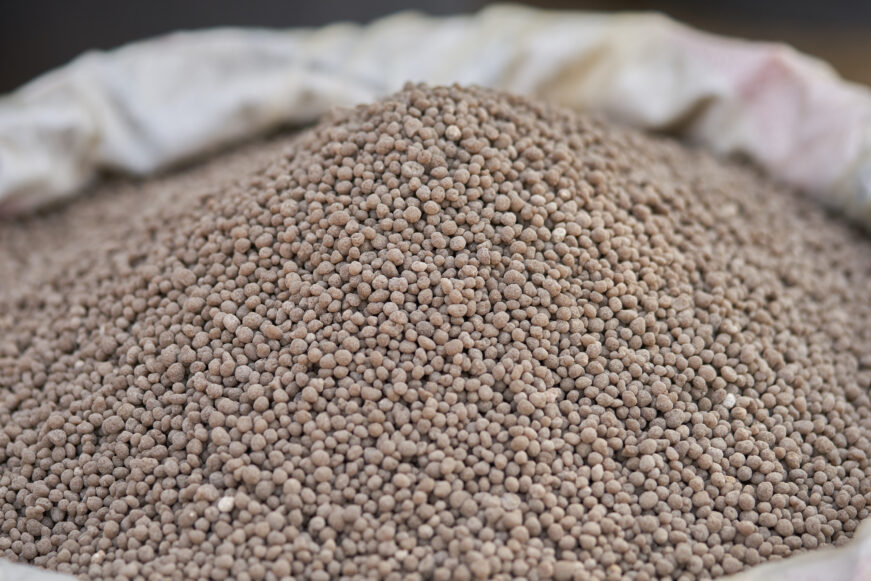
- In the past, the atmosphere and rain provided crops with free sulfur and farmers rarely considered adding sulfur to their nutrient program.
- With the reduction in acid rain, sulfur deficiencies in crops have become more prevalent.
- Plants require sulfur for the synthesis of proteins containing the amino acids methionine, cystine, and cysteine, meaning non-protein nitrogen is accumulated. Sulfur is also needed in the synthesis of chlorophyll in the plant and assimilation of nitrogen by root nodules in legume crops.
Signs of Sulfur Deficiency
- Yellowing of young leaves, then the entire plant.
- Veins that are lighter in color than adjoining parts of the plant.
- Small, hard, and woody roots and stems.