Why Smart Nutrition MAP+MST® Uses Elemental Sulfur in Fertilizer
Two sulfur fertilizer sources available to growers are sulfate (mostly commonly ammonium sulfate) and elemental sulfur. Learn more about each to find out why Smart Nutrition MAP+MST uses elemental sulfur in our fertilizer formulation.
Introduction
Your crops require sulfur (S) to grow and hit your yield targets. In crop production, sulfur is used by plants in large enough quantities that it is considered the fourth most needed fertilizer nutrient right after the “big three,” nitrogen (N), phosphorus (P), and potassium (K). More specifically, sulfur is used by crops for protein synthesis. It also aids in seed production and producing the chlorophyll necessary for plants to carry out photosynthesis. Finally, it is a necessary component of three amino acids (cysteine, methionine, and cystine) needed for protein synthesis.
However, your crop does not just go out and acquire sulfur (S) as it can only be taken up by the roots in the sulfate form (SO42-). The tricky part is choosing the right kind of sulfur fertilizer as each formulation has some pros and cons (as we discuss below.) Matching the right source of sulfur (sulfate-based fertilizer vs. elemental sulfur-based fertilizer) is an important aspect of matching your local field and weather conditions to the seasonal sulfur metabolism of your crop. We further analyze the difference between sulfate and elemental sulfur below.
Sulfate Sulfur
Sulfate-sulfur based fertilizers are immediately available to plants because the sulfate does not require processing by microbes, is mobile in the soil, and can dissolve readily in soil moisture. However, this means sulfate is prone to loss through leaching when snowmelt or rainfall pushes nutrients below the rooting zone of the crop—preventing uptake. Sulfate-sulfur fertilizers are more suited for pre-plant and in-season applications since the form is readily plant available and applications can be timed as close as possible to crop uptake demand.
Elemental Sulfur
In comparison, elemental sulfur-based fertilizers are immobile in the soil until it oxidizes with the help of microbes. Elemental sulfur provides a slow release of sulfur throughout the growing season to reduce potential sulfate leaching losses. The rate of conversion (elemental sulfur to sulfate) is strongly controlled by soil temperature and moisture which impacts the activity of soil microbes. Cold or cool soils have a lower conversion rate due to depressed soil microbe activity. Conversely, warmer soils found during the growing season can drive abundant soil microbial activity.
A common problem with traditional elemental sulfur formulations is that many materials oxidize and release sulfur too slowly to meet crop demand—especially during accelerated crop growth and nutrient uptake demand. The slow release is caused by uneven particle sizes or a granule shape that prevents equal access to the elemental sulfur. That’s where our patented Micronized Sulfur Technology (MST) comes in. The technology provides quicker oxidation of elemental sulfur to the sulfate form, by soil microbes, ensuring the sulfur becomes available in time to meet crop demand.
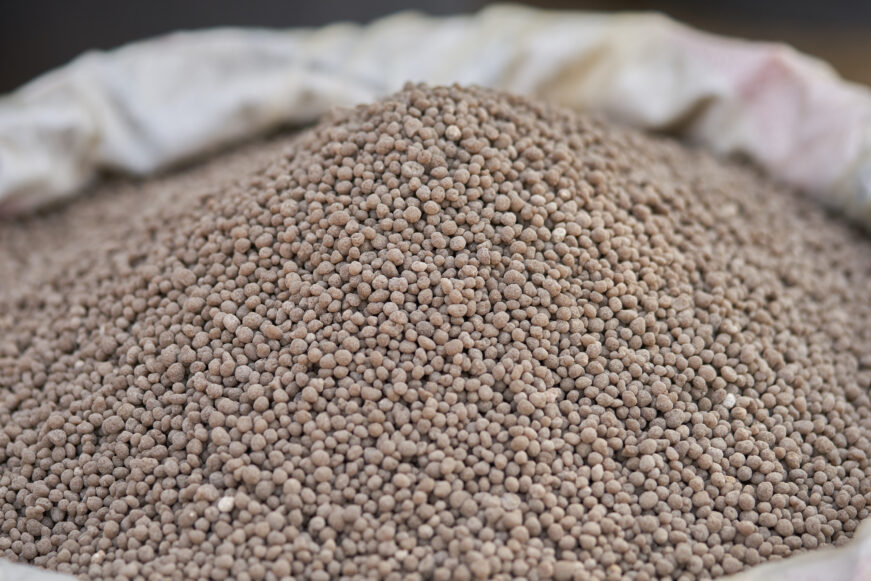
The micronized elemental sulfur in Smart Nutrition MAP+MST has an average particle size of 15 microns. This small particle size means a larger surface area is available to soil microbes—which means that the elemental sulfur will oxidize quicker, as the soil warms up during the growing season, and will be available to crops sooner.
Smart Nutrition MAP+MST can be applied in the spring or the fall when the soil is cool, and the microbes are dormant. Dormant microbes are not able to oxidize and convert the elemental sulfur to sulfate (which prevents leaching from occurring). The homogeneous design of each granule delivers consistent nutrients to your crops to help maximize production.
And as an added bonus—the elemental sulfur used in MST® is an abundant byproduct of the oil and gas industry that we’re utilizing to address agricultural sulfur deficiencies that affect farmers. At least 40 percent of Western Canadian soils are deficient in sulfur and growers in the United States have seen significant deficiencies since the introduction of the 1970 Clean Air Act.
Learn how Smart Nutrition MAP+MST can benefit all crops and how to apply the product for different crop types.
For more information, contact your local rep or submit your questions through Ask an Agronomist.