Discussing Smart Nutrition™ MAP+MST® With American Ag Network
Dr. Cristie Preston joined Jesse Allen on American Ag Network recently to talk about why Smart Nutrition MAP+MST is a great choice during times of high fertilizer prices. Listen to the interview or read Dr. Preston’s answers below.
Jesse Allen: We’re talking fertilizer today and it’s no secret that we’ve obviously seen very high fertilizer prices. It’s a concern for our growers across the country. Prices have come down a little bit in some cases but they’re still very elevated, and I’m sure you’re hearing from a lot of growers just how much of a concern that is, maybe not necessarily this past spring but going into this fall and into 2023.
Cristie Preston: Exactly, and with that being said we’re looking for specialty products that protect from nutrient losses and products that are versatile where you can apply them in the fall or you can wait until next spring but ensuring that those nutrients are there when we need them the most is definitely going to be key for this year and this upcoming year.
JA: Very very true. Farmers are obviously trying to find the best ROI and make sure that they’re getting the right nutrients for their crops. Let’s talk Smart Nutrition with Nutrien. Tell us a little bit about this product and what makes it a little bit different.
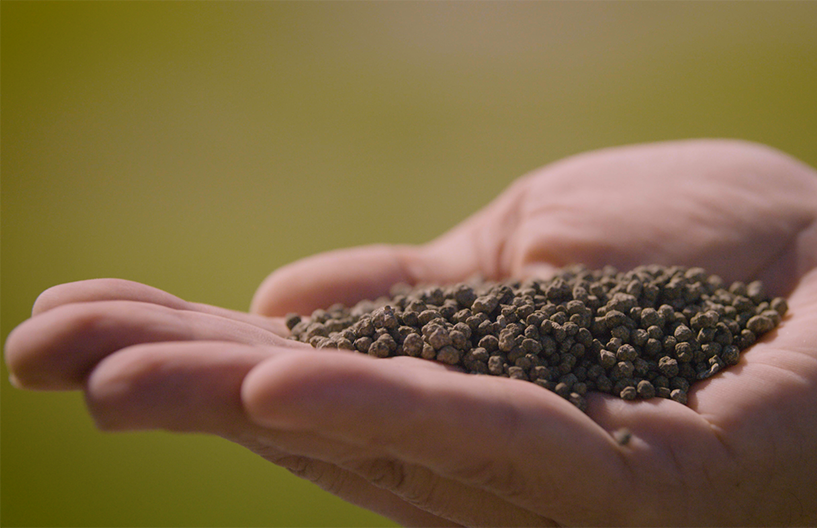
CP: So, Smart Nutrition MAP+MST is still a relatively new product, it’s only been on the market for a little over a year now. The fertilizer grade is a 9-43-0-16 percent sulfur. What this product offers is versatility in application timing while also being a nutrient dense fertilizer. With 9-43 and 16 percent sulfur you’re getting a little bit of nitrogen, you’re getting a high concentration of phosphorus, and then you’re getting 16 units of sulfur within one product. This is really allowing farmers to cover more acres with a nutrient dense fertilizer.
JA: Well obviously talking about a high nutrient density, and like I mentioned that ROI, I think about farmers as they’re looking to maybe cut some corners. We don’t want them to but getting a product like Smart Nutrition is something that can maybe step in to be a great substitute if they’re looking to possibly save a few dollars but still get a great return on investment.
CP: Exactly, and you know I really don’t like to talk about balanced fertilizers per se, whenever you’re looking at nutrient applications but the Smart Nutrition product, since it is high in phosphorus and high in sulfur, is capable of supplying both of those nutrients at a high enough rate that most crops you’re not having to supplement with another sulfur source. Smart Nutrition MAP+MST this fall will allow you to apply both your phosphorus and your sulfur at the same time.
JA: Talk to me a little bit about some of that fall application. If farmers are using this product, what are some of the steps they’re going to take? Is there any differences from traditional products they’ve used in the past? What are some of the things they need to keep in mind?
CP: What we want farmers to know the most is that this product does require some incorporation so we do recommend you can surface broadcast and then come over with some type of incorporation to make sure that when the soil temperatures do warm up in the spring, you’re getting that optimum oxidation rate. Every time you mention elemental sulfur, farmers kind of freak out because they want to know if it’s going to oxidize quick enough, if it’s going to be available this growing season, and the answer is yes. Because the MST in the MAP+MST is micronized sulfur, so it’s a smaller particle size, it will increase the oxidation rate. But not only is it a smaller particle size, but since we’ve been able to incorporate the MST in our MAP production facility, the two solutions are mixed together and then the product is granulated. What that allows is uniform distribution within each granule. It’s not a layering process or something doesn’t have to break down. If we apply it this fall, generally, we say follow your nitrogen applications this fall. Wait until the soil temperatures drop below, say 50 degrees, that’s just a good benchmark for a reduction in microbial activity. That doesn’t mean that it’s not still happening but less chances of microbial activity happening and you’re not going to see those oxidation rates until the soils warm back up this spring. That’s what allows the elemental sulfur to not be converted this fall into sulfate and then potentially lost with high rainfall events, high snowfall melting.
JA: I know as well, looking on the website, you have a lot of great information there as well. A lot of trial data, whether we’re talking corn, soybeans, canola, even cotton, etc. you have a lot of information there that if growers are wondering a little bit and want to see some of that great trial data you have quite a bit of it online.
CP: We do, and actually we’ve done quite a bit of work with the fall versus spring applications to make sure that the sulfur does stay within the soil, make sure we’re seeing the same yields as spring applications, and specifically in Minnesota. Year after year in some cases the fall application is better than the spring, so just knowing how to use the product is kind of my number one goal. To make sure that yes, guess what, you might not have been applying sulfur over the past couple of years but crops still need it because we’ve seen a reduction in acid rain and we’re seeing more purified fertilizer sources, so they don’t have the sulfur that has traditionally been applied there either. Making sure that farmers know there isn’t a good soil test so most of our recommendations for these crops are based on removal rates. Granted those can change variety to variety, but just having a general idea, and if for some reason you see sulfur deficiencies one year, maybe you should consider applying a little bit more sulfur the next.